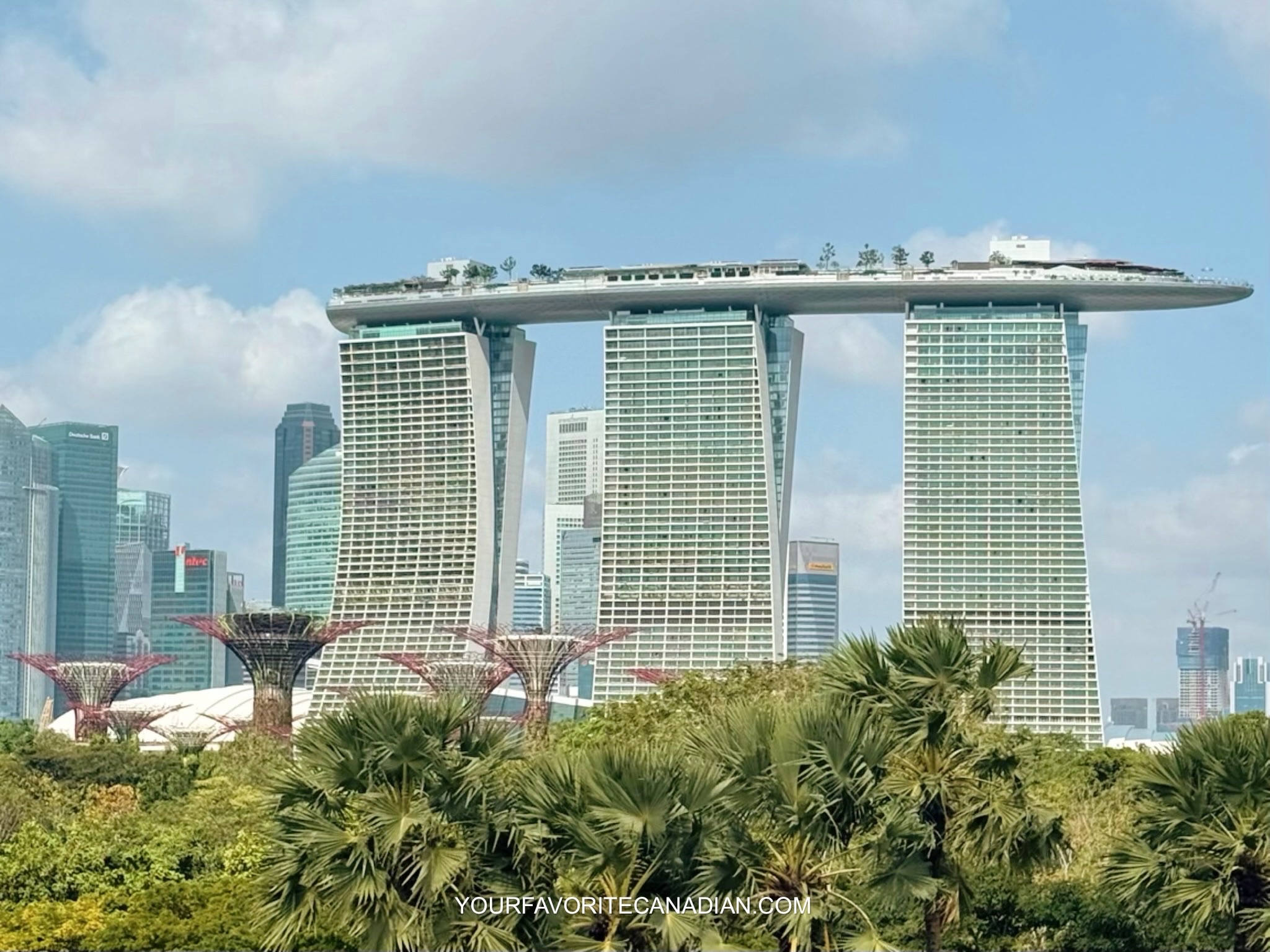
Planning a trip to Singapore? This complete Singapore travel guide covers everything you need to know before visiting, from the best time to go and local customs, to transportation, safety, and must-try food!
Whether you’re exploring the futuristic skyline, wandering through vibrant neighborhoods like Chinatown and Little India, or indulging in world-famous street food, Singapore offers a unique blend of culture, luxury, and efficiency.
This guide is designed to help you plan your trip with ease and make the most of your time in one of Asia’s most exciting destinations.
Let’s get you fully prepared for an unforgettable trip to Singapore.
Table of Contents
- Best Time to Visit: Climate, Crowds & Prices
- Local Culture & Etiquette: Cultural Norms, Language, Etiquette – Visiting Religious Sites
- Money, Currency & Payments
- Accommodation Options: Types of Accommodations & Essential Apps
- Local Cuisine: What to Eat in Singapore
- Transportation in Singapore: How to Get Around
- Safety & Health: Tap Water, Health Precautions, Emergency Information & Safety Tips
- Visa Requirements for Singapore
- Staying Connected: SIM Cards & Internet in Singapore
1
Best Time to Visit Singapore: Climate, Crowds & Prices
Essential Info
- Singapore has a tropical climate year-round, meaning it’s hot, humid, and experiences frequent rainfall in every season.
- Average temperatures range between 25°C to 31°C (77°F to 88°F) throughout the year.
- There is no true “dry season”, but some months are slightly less rainy than others.
- Peak tourist seasons typically occur during December–January and June–August.
What to Expect
Unlike many destinations, Singapore doesn’t have distinct seasons like summer or winter. Instead, you can expect consistent heat and humidity no matter when you visit.
Rain showers are common but usually short and intense, often happening in the afternoon or evening. It’s rare for it to rain all day, so your plans usually won’t be heavily impacted.
- February to April is often considered the best time to visit, with slightly less rainfall and plenty of sunshine.
- November to January tends to be the rainiest period due to the monsoon season.
- June to August is a popular time for travelers, but it can feel especially humid and crowded.
Singapore is also known for hosting major events and festivals year-round, which can influence both crowd levels and prices.
Our Singapore Weather Tips
- Pack light, breathable clothing, you’ll feel the humidity immediately.
- Bring a small umbrella or rain jacket for sudden showers.
- Plan indoor activities (malls, museums, cafés) during the hottest part of the day.
- If you want fewer crowds and good weather, aim for February to April.
- Book accommodations in advance if you’re traveling during peak periods to avoid higher prices.
2
Local Culture & Etiquette in Singapore: What Travelers Should Know
Essential Info
- Singapore is a multicultural country with strong influences from Chinese, Malay, Indian, and Western cultures.
- The main language is English, making it very easy for travelers to communicate.
- Cleanliness, respect, and order are taken very seriously.
- There are strict laws and fines for things like littering, jaywalking, and eating or drinking on public transport.
What to Expect
One of the first things you’ll notice in Singapore is how clean, organized, and efficient everything is. This is not by chance, there are strict rules that are actually enforced.
Culturally, Singapore is very respectful and relatively conservative compared to some Western countries.
- In religious sites (temples, mosques, churches), you’re expected to dress modestly, covering shoulders and knees.
- Always remove your shoes before entering temples or someone’s home.
- Public behavior is generally calm, loud or disruptive actions are frowned upon.
- Physical affection in public should be kept minimal.
You’ll also notice small but important social habits:
- People often queue in an orderly way (even for public transport).
- Giving up your seat for elderly people is expected.
- Tipping is not common, as service charges are usually included.
Our Tips
- Chewing gum is largely banned in Singapore, don’t chew gum in public.
- Never litter, even accidentally, Singapore takes this very seriously.
- Don’t eat or drink on public transport, it’s not allowed.
- Carry a light scarf or cover-up when visiting religious sites.
- When in doubt, observe what locals do, Singapore is very easy to navigate socially if you follow their lead.
3
Money, Currency & Payments in Singapore
When traveling to Singapore, understanding how money, payments, and local costs work will help you plan your budget and avoid unnecessary fees. Here’s everything you need to know to manage your money smoothly during your trip.
Singapore Dollar (SGD): The Local Currency
The official currency of Singapore is the Singapore Dollar (SGD).
Singapore is a highly developed and modern country, and unlike many destinations in Southeast Asia, it operates largely as a cashless society. While cash is still accepted everywhere, most businesses prefer card or contactless payments.
Exchange Rates
Exchange rates fluctuate, so it’s always a good idea to check the current rate before your trip.
On average:
- 1 USD ≈ 1.30-1.40 SGD
- 1 CAD ≈ 0.90-1.00 SGD
For the most accurate rates, check a reliable source like your bank or Google before exchanging money.
Just like in most countries, the best way to get a good exchange rate is to withdraw money from an ATM and decline the machine’s conversion rate, allowing your home bank to handle the exchange.
Where to Exchange Money in Singapore
You’ll have no trouble accessing money in Singapore. It’s one of the easiest places in Asia for this.
- ATMs are widely available across the city and are the most convenient option
- Licensed money changers (often found in malls or tourist areas) usually offer competitive rates
- Banks are also a safe option, but may have slightly less favorable rates
Avoid exchanging money at the airport if possible, as rates there tend to be slightly worse.
Card Payments, Minimum Spend & Transaction Fees in Singapore
Singapore is extremely card-friendly, and you’ll be able to pay by card almost everywhere.
- Visa and Mastercard are widely accepted
- American Express is accepted in many places, but not everywhere
- Contactless payments (Apple Pay, Google Pay) are very common
Unlike some countries, minimum spend requirements are rare, and extra fees for card payments are uncommon in most establishments.
However, you may still encounter a few exceptions:
- Small local vendors or hawker stalls may be cash-only
- Some places may have a minimum spend for card payments
Cash vs Card: What You Actually Need
Even though Singapore is mostly cashless, it’s still a good idea to carry some cash for:
- Hawker centers (local food courts)
- Small shops or markets
- Older establishments
That said, you can easily travel through Singapore using mostly card or mobile payments.
ATM Fees
ATM access in Singapore is easy and reliable.
- Local ATM fees are generally low or non-existent, depending on the bank
- Your home bank may still charge international withdrawal fees
To minimize fees:
- Withdraw larger amounts at once instead of multiple small withdrawals
- Use a card with low or no foreign transaction fees if possible
Tipping in Singapore
Tipping is not expected in Singapore.
- Most restaurants already include a 10% service charge
- An additional GST (tax) is also often added to your bill
- No extra tip is required, but you can round up for excellent service
For services like taxis, tipping is not customary.
Our Money Tips for Singapore
- Use your card or phone for most payments, it’s the easiest option
- Always carry a small amount of cash for hawker centers
- Double-check your bill for service charge + GST before tipping
- Avoid exchanging money at the airport if possible
- If you’re traveling on a budget, prioritize local food spots over restaurants
4
Accommodation Options
Choosing your accommodation can significantly impact your travel experience. To help you make the best decision, here’s a breakdown of the four main types of accommodations, with recommendations from our past trips and essential apps that will make booking these stays easier for you!
Types of Accommodations
- Apartments & Serviced Apartments
Apartments and serviced apartments are the closest alternative to villas in Singapore, offering more space, privacy, and a home-like experience.
These accommodations are usually fully equipped with essentials like a kitchen, laundry facilities, and separate living areas, making them a great option for longer stays, families, or travelers who want more comfort and flexibility.
Serviced apartments, in particular, often include hotel-style amenities such as housekeeping, gyms, and concierge services, giving you the best of both worlds between a hotel and a private rental.
While this option tends to be more expensive than standard hotel rooms, it can be worth it if you value extra space, privacy, and convenience, especially in a destination like Singapore where rooms are typically smaller.
- Boutique Hotels
Boutique hotels are a very popular accommodation option in Singapore, especially for travelers looking for a more unique and stylish experience.
These hotels are typically smaller and design-focused, often located in vibrant neighborhoods like Chinatown, Kampong Glam, or Tiong Bahru. Many boutique hotels are set in beautifully restored heritage buildings, combining modern comfort with local character and charm.
Staying in a boutique hotel allows you to enjoy a more personalized and aesthetic experience compared to larger chain hotels. While prices can vary, they are often a great middle-ground between budget and luxury.
- Luxury Hotels
Singapore is known for its world-class luxury hotels, making it an ideal destination for travelers looking to elevate their stay.
From iconic skyline views to rooftop infinity pools and five-star service, luxury hotels in Singapore offer an experience that goes far beyond just accommodation. Many of these hotels are located in prime areas like Marina Bay, providing easy access to major attractions, shopping, and dining.
Expect high-end amenities such as spas, fine dining restaurants, fitness centers, and exceptional service. While this is the most expensive accommodation option, it can be well worth it for a special occasion or if you want to fully enjoy what Singapore has to offer.
- Hostels
For backpackers and budget travelers, hostels are the most economical choice. While they may lack the luxury and comfort of villas or hotels, hostels offer a unique and social experience, perfect for young travelers.
You’ll typically have a bed in a shared dormitory, making it an excellent way to meet new people, especially if you’re traveling solo. Many hostels also organize group activities to help guests connect.
If you’re young and willing to trade a bit of comfort for a memorable and social experience, hostels are the way to go.
Essential Apps
- Booking.com: This app offers a wide range of accommodations, including hotels, hostels, and villas, all in one place.
- Airbnb: Perfect for finding unique and original villas or apartments that offer a home-like experience.
- Hostelworld: Specializing in hostels, this app features an excellent rating system to help you choose the best option. It also includes group chats where you can connect with others who will be staying at the same hostel.
Extra Recommendation: Once you’ve found a place you like, especially with hotels and hostels, be sure to visit their official website. Often, you can find exclusive discounts when booking directly through them.
Stay connected! Follow us on social media for exclusive content & updates on our travels.



On our website, you’ll find all the essential information and tips, while on our social media, you’ll get even more – including personal experiences, funny moments, stunning videos, and much more!
5
Local Cuisine in Singapore: What to Eat & Where to Try It
Singapore is known as one of the best food destinations in the world, offering a unique mix of Chinese, Malay, Indian, and international influences. Whether you’re eating at a street food stall or a high-end restaurant, food is a central part of the Singapore experience.
Essential Info
- Singapore is famous for its hawker centers, large food courts offering affordable and authentic local dishes
- You can eat very well on a budget, with meals starting around $5-$10 SGD
- Tap water is safe to drink, so you don’t need to buy bottled water
- Food hygiene standards are very high, even in street food settings
What to Expect
One of the highlights of visiting Singapore is eating at hawker centers like Maxwell Food Centre or Lau Pa Sat. These open-air food courts bring together dozens of stalls, each specializing in a specific dish.
Some must-try dishes include:
- Hainanese chicken rice – considered a Singapore national dish
- Laksa – a spicy coconut noodle soup
- Chili crab – one of the most famous (and messy) dishes
- Char kway teow – stir-fried noodles with seafood and egg
- Satay – grilled skewers served with peanut sauce
Singapore is also incredibly diverse when it comes to food options. You’ll find everything from local dishes to international cuisine, often all on the same street.
Our Tips
- Eat at hawker centers as much as possible, it’s where you’ll find the best and most authentic food
- Don’t be afraid to try busy stalls, long lines usually mean the food is worth it
- Bring cash, as some stalls don’t accept cards
- Share dishes if possible so you can try more variety
- Stay hydrated, the heat and humidity can be intense
6
Transportation in Singapore: How to Get Around
Getting around Singapore is incredibly easy thanks to its modern, efficient, and well-connected transportation system. Whether you prefer public transit, ride-hailing apps, or simply walking, you’ll have no trouble exploring the city.
MRT (Mass Rapid Transit)
The MRT is the fastest, most convenient, and most affordable way to get around Singapore.
This subway system connects all major areas of the city, including top attractions, neighborhoods, and even the airport. Stations are clean, air-conditioned, and clearly marked in English, making it very easy for travelers to navigate.
Trains run frequently, and the network is extremely reliable, making it the best option for daily travel.
Buses
Singapore’s bus system is another excellent way to get around, especially for reaching areas not directly accessible by MRT.
Buses are modern, comfortable, and fully air-conditioned. They follow extensive routes across the city and are well integrated with the MRT system.
While slightly slower than the MRT due to traffic, buses are a great option if you want to see more of the city during your ride.
How Payments Work on Public Transport (MRT & Buses)
Using public transportation in Singapore is incredibly simple thanks to the tap-in, tap-out system.
Whether you’re taking the MRT or the bus, you just need to tap your contactless credit card, debit card, or mobile payment (Apple Pay / Google Pay) when entering and again when exiting.
- On the MRT: tap at the gates when you enter and when you leave
- On the bus: tap when boarding and tap again when getting off
Fares are calculated based on the distance you travel, not a flat rate.
One important thing to know is that payments are not always charged instantly. If you’re using a foreign card, transactions are often grouped together and charged later as a single total, sometimes at the end of the day or after a few days depending on your bank.
In terms of pricing:
- Most rides cost between $1-$2.50 SGD
- Longer trips can go up to around $3-$4 SGD
Overall, it’s a very affordable and hassle-free system, no need to buy tickets or worry about exact fares.
Taxis & Ride-Hailing Apps
Taxis are widely available in Singapore and are safe, metered, and regulated.
For even more convenience, ride-hailing apps like Grab and Uber (limited availability in Singapore) are popular options.
They’re especially useful:
- Late at night
- When traveling with luggage
- If you want a more direct and comfortable ride
Prices are higher than public transport but still reasonable compared to many major cities.
Walking
Singapore is a very walkable city, especially in central areas like Marina Bay, Chinatown, and Little India.
Sidewalks are well maintained, and pedestrian crossings are safe and easy to use. Walking is often the best way to explore neighborhoods and discover hidden spots along the way.
Just keep in mind that the heat and humidity can be intense, especially during the day.
Getting to & From the Airport
If you’re arriving at Changi Airport, getting to the city is quick and simple.
- MRT: Around 45 minutes to the city center
- Taxi / Grab: Around 20-30 minutes depending on traffic
Both options are convenient, so your choice will depend on your budget and comfort level.
Essential Apps for Getting Around
- Google Maps – Best for directions, routes, and real-time navigation
- Grab – For taxis and private rides
- Citymapper – Great for public transport routes and timing
Our Transportation Tips
- Use your contactless card or phone – no need to buy tickets
- Take the MRT whenever possible-it’s the easiest option
- Avoid rush hours (7:30-9:30 AM and 5:00-7:00 PM)
- Carry a light layer – public transport is heavily air-conditioned
7
Safety & Health in Singapore
When traveling to Singapore, safety and health are generally not major concerns thanks to the country’s high standards and strict regulations. However, it’s still important to understand a few key details to ensure a smooth and stress-free trip.
Below are the main things to consider: tap water conditions, general health precautions, and essential emergency information.
Tap Water Conditions
Tap water in Singapore is completely safe to drink.
It meets international health standards and is regularly monitored, so there’s no need to buy bottled water unless you prefer to.
Health Precautions to Take
Singapore is a very clean and well-maintained country, but there are still a few things to keep in mind.
Heat & Humidity
Singapore has a tropical climate, which means it’s hot and humid year-round.
- Stay hydrated
- Wear lightweight, breathable clothing
- Take breaks indoors to avoid heat exhaustion
Sun Protection
The sun can be very strong, even on cloudy days.
- Use sunscreen daily
- Wear sunglasses and a hat when exploring
Food Safety
Food hygiene standards in Singapore are extremely high, including at hawker centers.
Emergency Information
Singapore has a very efficient and reliable emergency system.
Emergency Numbers
- Police: 999
- Ambulance & Fire: 995
Keep these numbers accessible during your trip, although it’s unlikely you’ll need them.
Hospitals and Clinics
Singapore offers world-class healthcare facilities, both public and private.
Hospitals and clinics are modern, clean, and highly professional. Many doctors and medical staff speak fluent English, making communication easy for travelers.
In case of a serious issue, you’ll have access to some of the best medical care in Asia, but keep in mind that costs can be high, so travel insurance is strongly recommended.
Pharmacies
Pharmacies are easy to find throughout Singapore, especially in malls and busy areas.
You’ll find a wide range of over-the-counter medications, and pharmacists are generally helpful for minor health concerns.
However:
- Bring any essential prescription medications with you
- Keep them in their original packaging
Safety Tips
Singapore is considered one of the safest countries in the world, with very low crime rates.
That said, basic precautions still apply:
- Keep an eye on your belongings in crowded areas
- Follow local laws strictly (they are heavily enforced)
- Avoid jaywalking, littering, or eating on public transport
- Be respectful of local rules and cultural norms
Every traveler needs to be cautious, especially if you are solo traveling. We wrote an entire article giving you our best safety tips. Make sure to come back at the end of your reading to read our article Top Safety Tips for Solo Travelers: Stay Safe & Confident.
8
Visa Requirements for Singapore
Before traveling to Singapore, it’s important to understand the entry requirements based on your nationality. The process is generally straightforward, and many travelers can enter without needing a visa.
Do You Need a Visa?
Singapore offers visa-free entry to many nationalities.
Citizens from countries like Canada, the United States, the United Kingdom, and most European countries can typically enter Singapore without a visa for short stays.
- Canadians can stay up to 30 days visa-free
- Your passport must be valid for at least 6 months beyond your date of entry
- You may be asked to show proof of onward travel (return or exit ticket)
If your country is not visa-exempt, you will need to apply for a visa in advance through an official Singapore visa agent or embassy.
Entry Requirements & Documents
Even if you don’t need a visa, you’ll still need to meet certain entry requirements.
Make sure you have:
- A valid passport (6+ months validity)
- A return or onward ticket
- Proof of sufficient funds for your stay (rarely asked, but possible)
- Your accommodation details (recommended to have on hand)
Singapore authorities are known for being efficient but strict, so it’s important to have all documents ready if requested.
SG Arrival Card (Mandatory)
All travelers must complete the SG Arrival Card before entering Singapore.
This is an electronic form (not a visa) that must be submitted within 3 days before your arrival.
It includes:
- Personal information
- Travel details
- Health declaration
You can submit it online through the official immigration website, it’s quick and free.
How Long Can You Stay?
The length of stay is determined upon arrival by immigration officers.
- Most visa-free travelers receive 30 days
- Extensions may be possible, but are not guaranteed
If you plan to stay longer, it’s best to check official immigration guidelines in advance.
Our Tips
- Fill out your SG Arrival Card in advance, a day or two before, to avoid delays at the airport
- Have your documents easily accessible when going through immigration
- Double-check your passport validity before booking your trip
- Always verify requirements based on your nationality before traveling
9
Staying Connected in Singapore
Staying connected in Singapore is incredibly easy thanks to its fast internet, strong mobile coverage, and wide availability of SIM and eSIM options. Whether you need data for navigation, social media, or work, you’ll have plenty of reliable choices.
Where to Buy
SIM cards are very easy to find in Singapore and can be purchased at:
- Changi Airport (upon arrival)
- Convenience stores like 7-Eleven
- Official mobile provider stores
- Electronics shops across the city
The main mobile providers in Singapore are Singtel, StarHub, and M1, all offering excellent coverage across the entire country.
If you prefer a quicker setup, you can also purchase an eSIM online before your trip and activate it as soon as you land.
Cost and Packages
SIM cards in Singapore are slightly more expensive than in other Southeast Asian countries, but still very reasonable for the quality of service.
- Tourist SIM cards typically cost between $10-$30 SGD
- Most packages include large data allowances (often 50GB or more)
- Some plans also include local calls and limited international minutes
- Validity usually ranges from 7 to 30 days, depending on the package you choose.
- With eSIMs, prices are similar and vary depending on the provider and duration.
Wi-Fi & Coverage
Singapore has excellent network coverage almost everywhere, including indoors.
You’ll also find free Wi-Fi in many places such as:
- Shopping malls
- Cafés and restaurants
- Hotels
- Public areas (via the Wireless@SG network)
Speeds are generally fast and reliable, making Singapore a great destination for remote work or staying constantly connected.
Singapore Travel Guide FAQ
Is Singapore worth visiting?
Yes, Singapore is absolutely worth visiting. It offers a unique mix of modern attractions, cultural neighborhoods, amazing food, luxury experiences, and one of the safest environments in Asia.
How many days do you need in Singapore?
Most travelers need 3 to 5 days in Singapore to explore major attractions like Marina Bay, Gardens by the Bay, Chinatown, Little India, and Sentosa Island.
What is the best month to visit Singapore?
The best months to visit Singapore are February to April, when rainfall is slightly lower and weather conditions are more pleasant.
Is Singapore expensive for tourists?
Singapore is more expensive than many Southeast Asian destinations, but it can fit different budgets. Hawker food, public transport, and budget hotels help reduce costs.
Can you drink tap water in Singapore?
Yes, tap water in Singapore is completely safe to drink and meets international health standards.
What food is Singapore famous for?
Singapore is famous for Hainanese chicken rice, chili crab, laksa, satay, and char kway teow.
Is Singapore safe for solo travelers?
Yes, Singapore is considered one of the safest countries in the world and is an excellent destination for solo travelers.
Do Canadians need a visa for Singapore?
Canadian citizens usually do not need a visa for short stays in Singapore and can typically stay up to 30 days visa-free. Always verify before travel.
Don’t want to miss out on our latest articles? Be sure to subscribe to our website, and you’ll receive a notification every time we publish something new!
