
Looking for the best things to do in Lyon, France? From wandering through the charming streets of Vieux Lyon and discovering hidden traboules to admiring the incredible mosaics inside the Basilica of Notre-Dame de Fourvière, Lyon is a city packed with history, architecture, food and beautiful viewpoints.
Whether you’re spending one day in Lyon, a weekend in Lyon, or a few days exploring the city, this guide covers the best Lyon attractions, free things to do, where to eat, and a few experiences you shouldn’t miss.
Lyon is also a fantastic destination for travelers who want to experience a different side of France beyond Paris. The city has more than 2,000 years of history, two rivers, UNESCO-listed historic districts and a famous food culture.
Table of Contents
- Wander Through Vieux Lyon (Old Lyon)
- Visit the Roman Theatres and the Odeon
- Visit the Basilica of Notre-Dame de Fourvière
- Eat at a Traditional Bouchon Lyonnais
- Visit Cathédrale Saint-Jean-Baptiste
- Have a Drink or Non-Alcoholic Refreshment by the Rhône
- Explore Croix-Rousse
- Relax at Parc de la Tête d’Or
- How to Get Around Lyon
- How Many Days Do You Need in Lyon?
- Is Lyon Expensive?
1
Wander Through Vieux Lyon (Old Lyon)
If there’s one neighborhood you absolutely shouldn’t miss in Lyon, it’s Vieux Lyon.
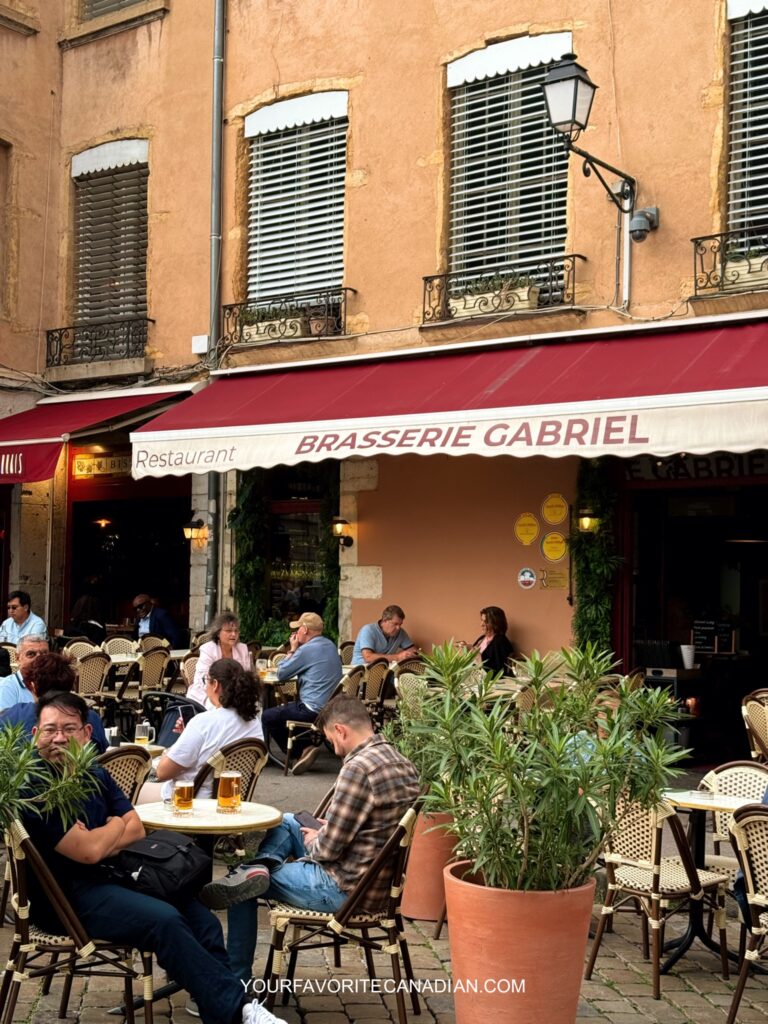
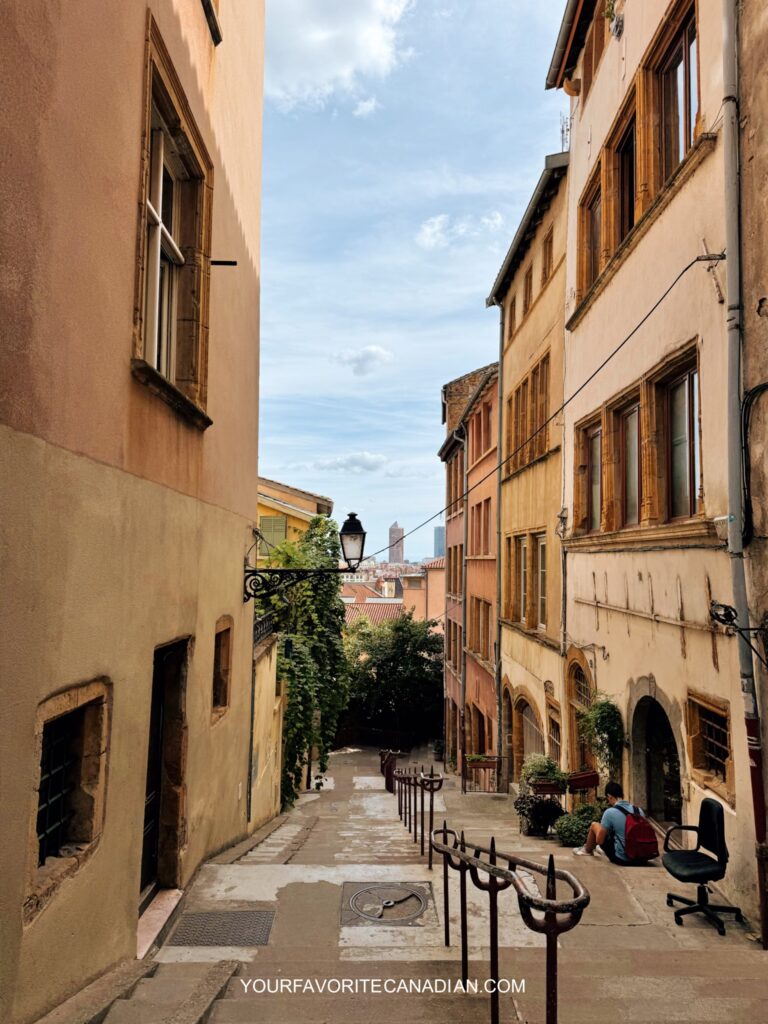
Located between Fourvière Hill and the Saône River, Vieux Lyon is one of the largest Renaissance districts in Europe. Its narrow cobblestone streets, colorful buildings, courtyards and hidden passageways make it one of the most enjoyable areas of the city to explore on foot. The historic district is also part of Lyon’s UNESCO World Heritage Site.
The best thing to do here is simply get lost.
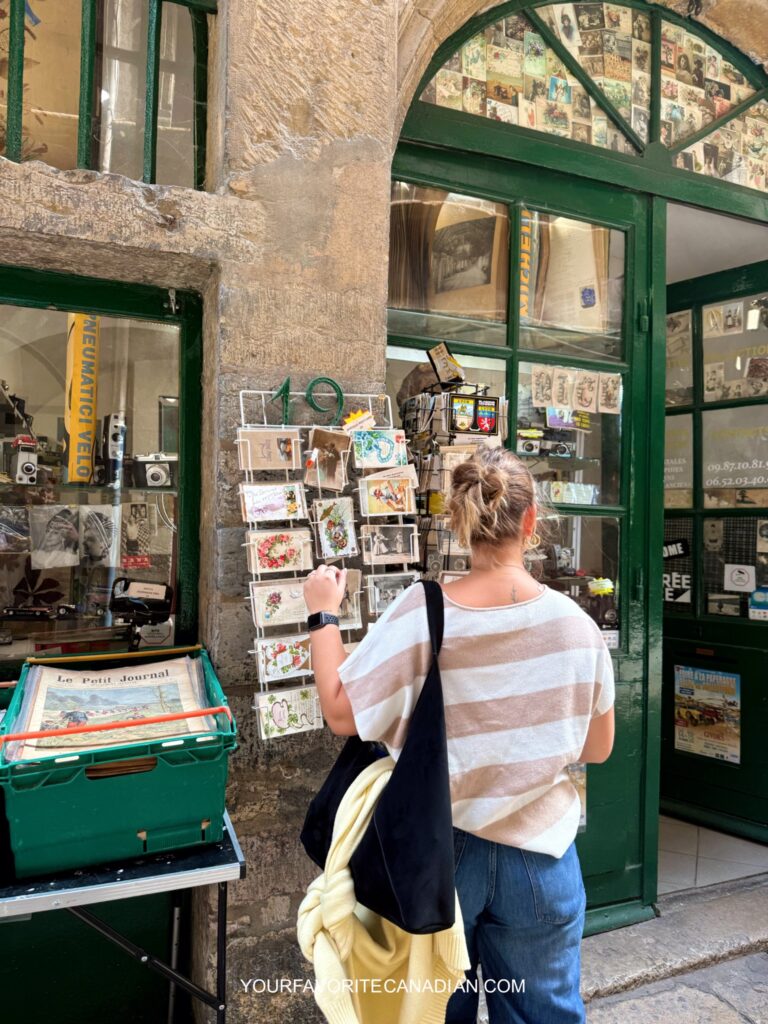
Walk along Rue Saint-Jean, explore Rue du Bœuf, stop in the small squares and keep an eye out for Lyon’s famous traboules.
What are traboules?
Traboules are hidden passageways that connect one street to another by passing through buildings and courtyards. They are particularly characteristic of Lyon and were historically used for practical reasons, including helping silk workers transport their goods.
There are hundreds of traboules across Lyon, although only a portion are currently open to the public. Some are located in residential buildings, so it’s important to be respectful: keep your voice down, don’t run through them and remember that people actually live there.
One of the best-known ones in Vieux Lyon is La Longue Traboule, which connects 54 Rue Saint-Jean with 27 Rue du Bœuf.
- Cost: Free
- Our tip: Come in the morning if you want a quieter experience. The Lyon Tourist Office also provides information about the traboules that are open to visitors.
For official information about neighborhoods, attractions and current opening information, check the Lyon Tourist Office before your visit.
2
Visit the Roman Theatres and the Odeon
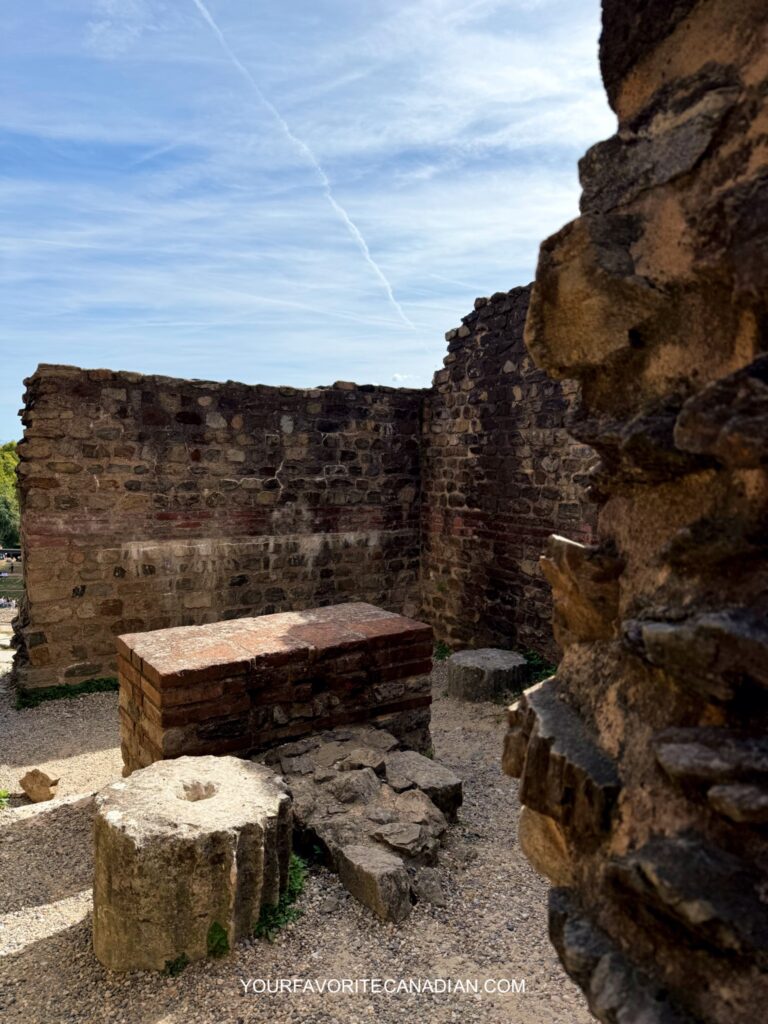
One of our favorite free stops in Lyon was the Roman Theatre and Odeon on Fourvière Hill.
Walking through these ancient ruins feels a little surreal because they’re right in the middle of the modern city.
The site dates back to Roman Lyon, when the city was known as Lugdunum. The larger theatre was used for performances such as tragedies and comedies, while the smaller Odeon was used for music, readings and other cultural activities.
Don’t miss the Odeon in the Roman Garden
We particularly recommend walking over to the Odeon and the surrounding Roman Garden. It’s a beautiful and peaceful place to wander around, and it’s completely free.
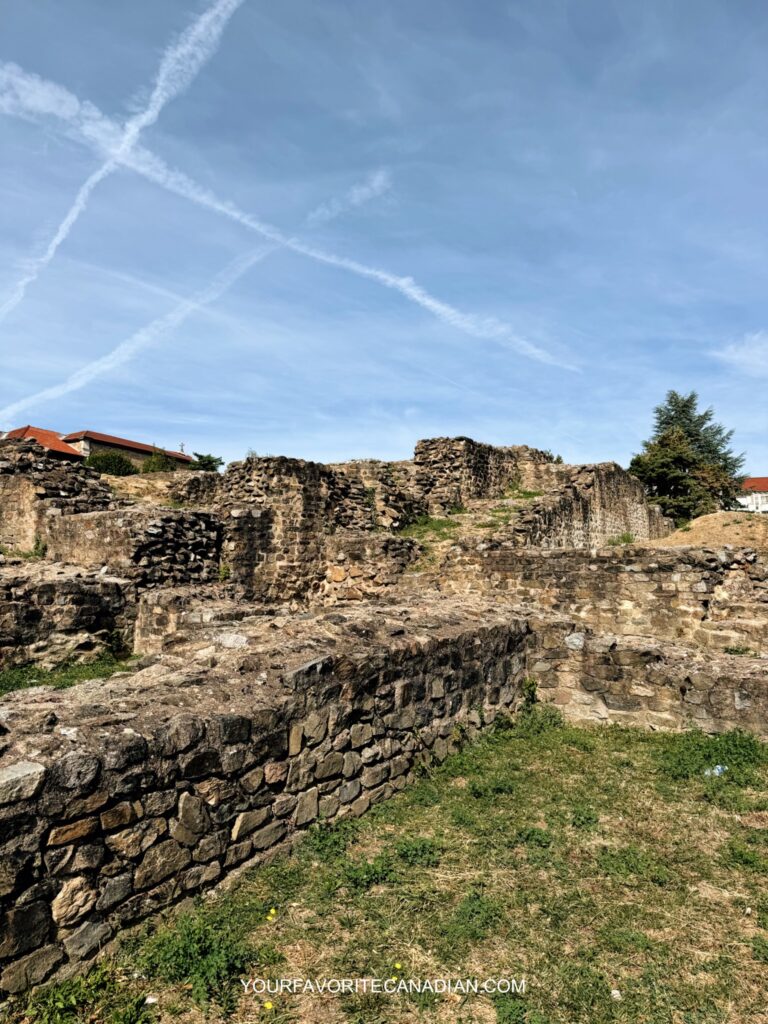
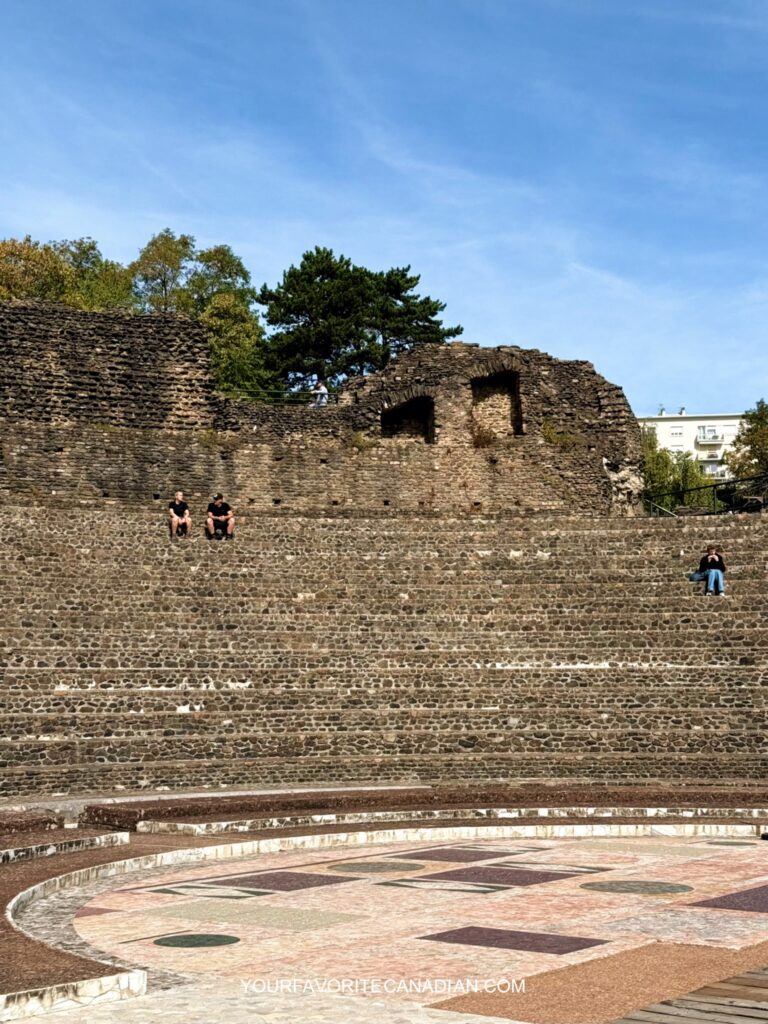
There is also the Lugdunum Museum right beside the archaeological site. We didn’t visit the museum ourselves, so we can’t give you a personal review of it, but it’s an option if you’re interested in learning more about Lyon’s Roman history.
The archaeological site itself is open daily, generally from 7 AM to 7 PM, although special closures can occur.
- Cost: Free for the Roman theatres and archaeological site
- Museum: Separate admission fee: between €4 and €7 (CA$6-12), depending on whether there is a temporary exhibition.
- How much time to allow: 15-45 minutes for the ruins
- Address: 6 Rue de l’Antiquaille, Lyon
- Our tip: Combine this stop with the Basilica of Notre-Dame de Fourvière since they’re both on Fourvière Hill.
3
Visit the Basilica of Notre-Dame de Fourvière
This was easily one of our favorite places in Lyon.
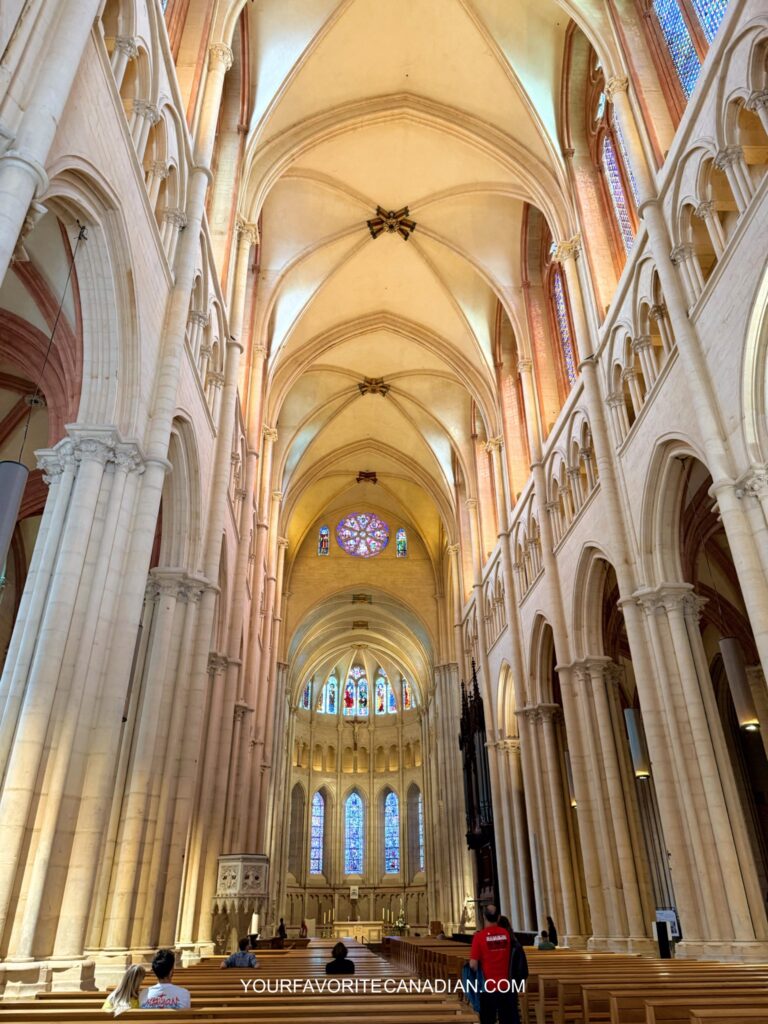
And honestly, the inside was even more impressive than we expected.
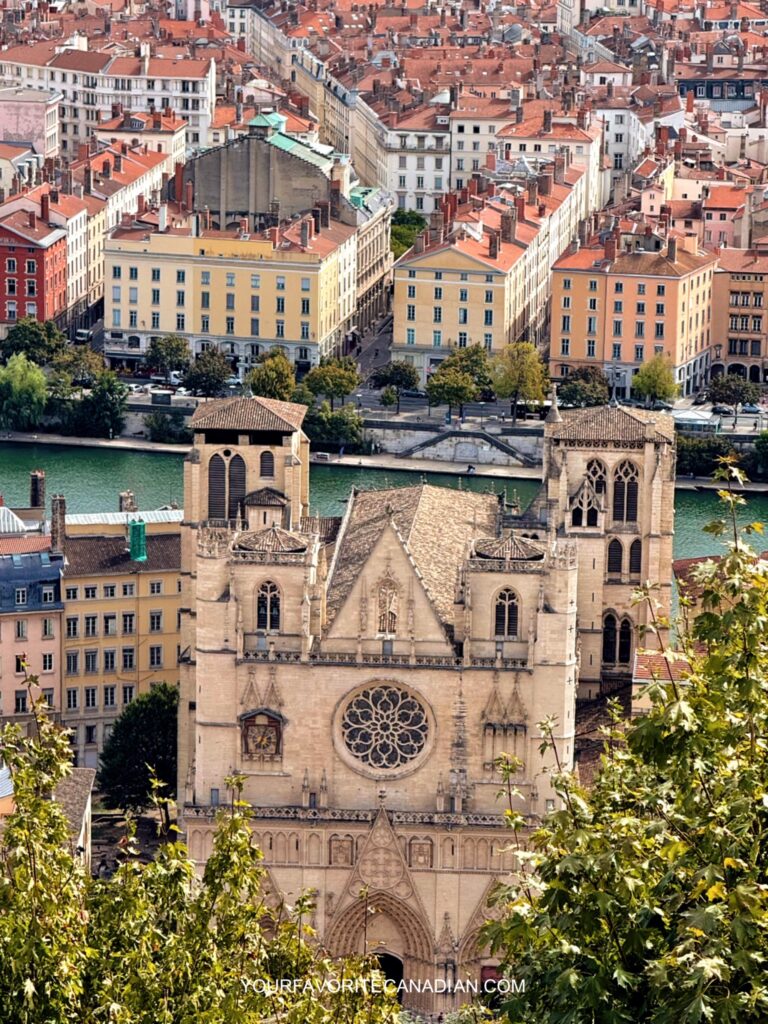
The Basilica of Notre-Dame de Fourvière sits at the top of Fourvière Hill and overlooks the entire city. From the outside, the building already looks spectacular, but make sure you actually go inside.
The interior is covered with incredibly detailed mosaics, marble, stained glass and elaborate decorations.
One of the things that really surprised us was realizing that so much of what we initially thought was painted artwork was actually made from tiny pieces of colored stone and glass arranged into mosaics.
We had never really stopped to notice that before, and seeing the level of detail up close was incredible.
It’s easily one of the most beautiful churches we’ve ever visited.
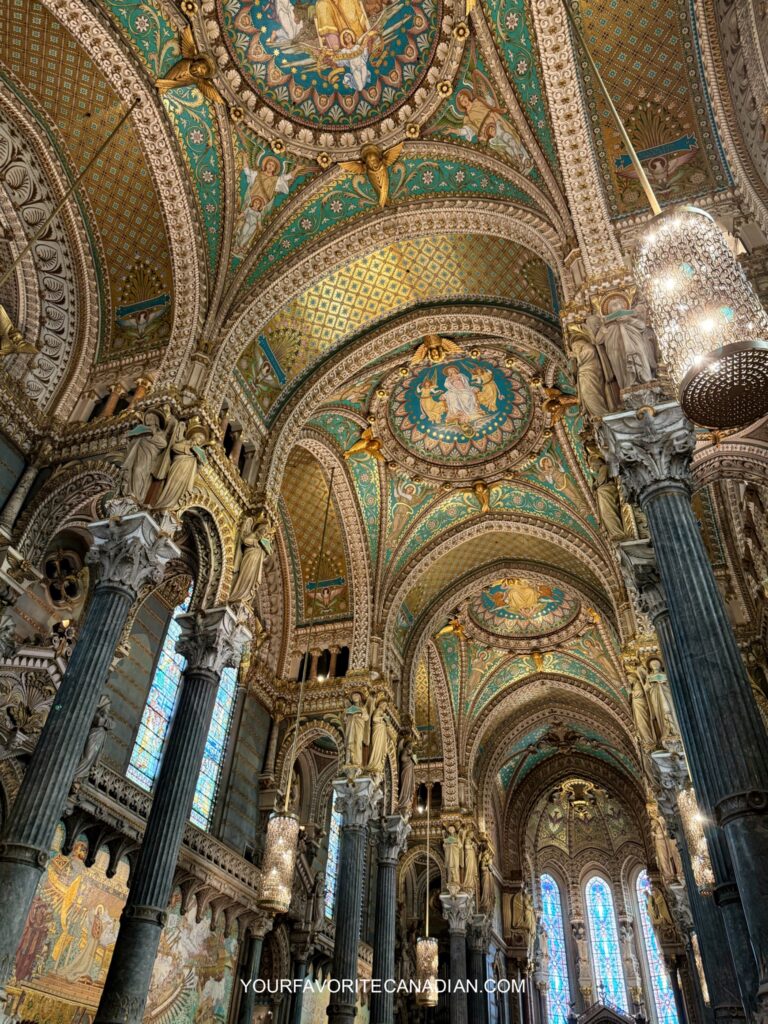
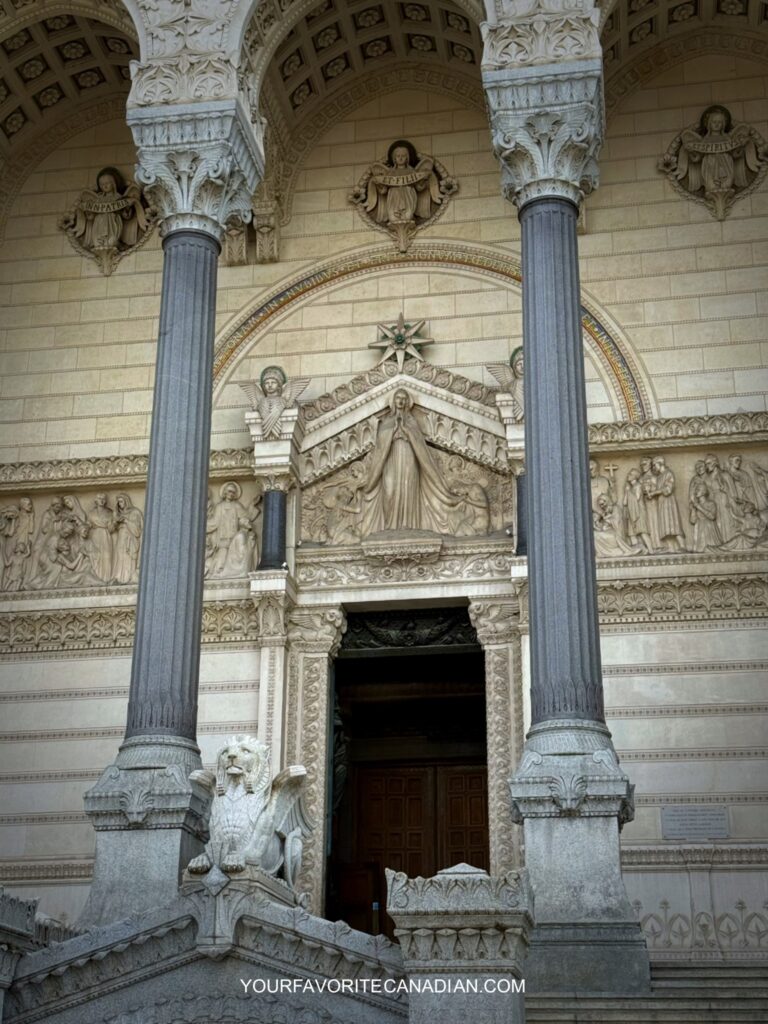

Is the Basilica of Fourvière free?
Yes! General access to the Basilica is free.
The Basilica is generally open every day, although visiting hours can vary around religious services. The current information from the Lyon Tourist Office lists general visiting hours of approximately 7 AM to 8 PM, with Sunday morning access restricted during services.
There are also paid guided tours and special experiences available if you’d like to learn more about the building.
- General admission: Free
- Guided tour: From approximately €8 (CA$13)
- Address: 8 Place de Fourvière
- How much time to allow: 15-45 minutes
How to get there
You can take the funicular from Vieux Lyon to Fourvière, or you can walk up the hill if you’re up for some exercise.
The walk is steep in places, but the Lyon Tourist Office specifically recommends walking up Fourvière as a way to discover the historic streets and views along the way.
Don’t forget the view!
Once you’re outside, walk onto the esplanade in front of the Basilica.
You get an incredible panoramic view over Lyon, making this one of the best viewpoints in the city.
4
Eat at a Traditional Bouchon Lyonnais
You can’t visit Lyon without experiencing its famous food culture.
And one of the quintessential Lyon experiences is eating at a bouchon lyonnais.
What is a bouchon lyonnais?
A bouchon is a traditional Lyon restaurant serving classic local cuisine in a generally casual and convivial setting.
Traditional dishes can include things such as quenelles, sausage, pâté, eggs meurette, salade lyonnaise, cervelle de canut and praline desserts.
Our experience at Le Laurencin
We actually chose Le Laurencin completely by chance.
We were simply looking for somewhere to eat in Vieux Lyon, and the menu caught our attention because of the price.
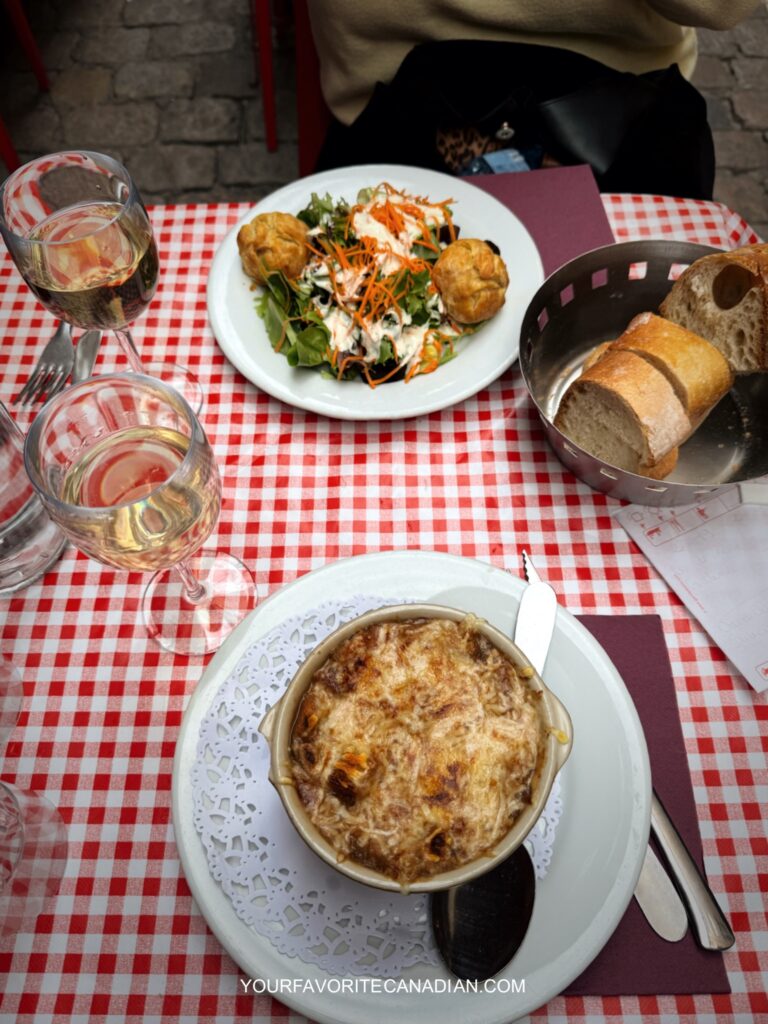
At the time of our visit, the restaurant offered a €19.90 (about CA$32) menu including a starter, main course and either dessert or cheese. The restaurant is located directly on Rue Saint-Jean in the heart of Vieux Lyon. The Lyon Tourist Office also lists it as a bouchon lyonnais serving traditional Lyonnais dishes.
We personally enjoyed our experience, and the onion soup was delicious.
However, there’s something we think you should know before choosing this restaurant.
After we shared our experience on social media, several French people told us that they considered Le Laurencin touristy and said they wouldn’t personally recommend it as an authentic bouchon experience. Online reviews are also mixed, with some diners praising the inexpensive menu and others criticizing the food.
So our honest take is:
If you’re looking for a very affordable way to try traditional Lyonnais food, Le Laurencin can be an option. But if your priority is finding a highly regarded, more authentic bouchon, we’d recommend doing a little more research and trying another one.
We don’t want to pretend we had a bad experience when we didn’t, we enjoyed our meal! But we also think it’s important to share what we learned afterward from locals and French followers.
- Price: From around €19.90 (CA$32) for a set menu when available
- Address: 24 Rue Saint-Jean, Vieux Lyon
- Tip: Prices and menus can change, so check the current menu before going.
5
Visit Cathédrale Saint-Jean-Baptiste
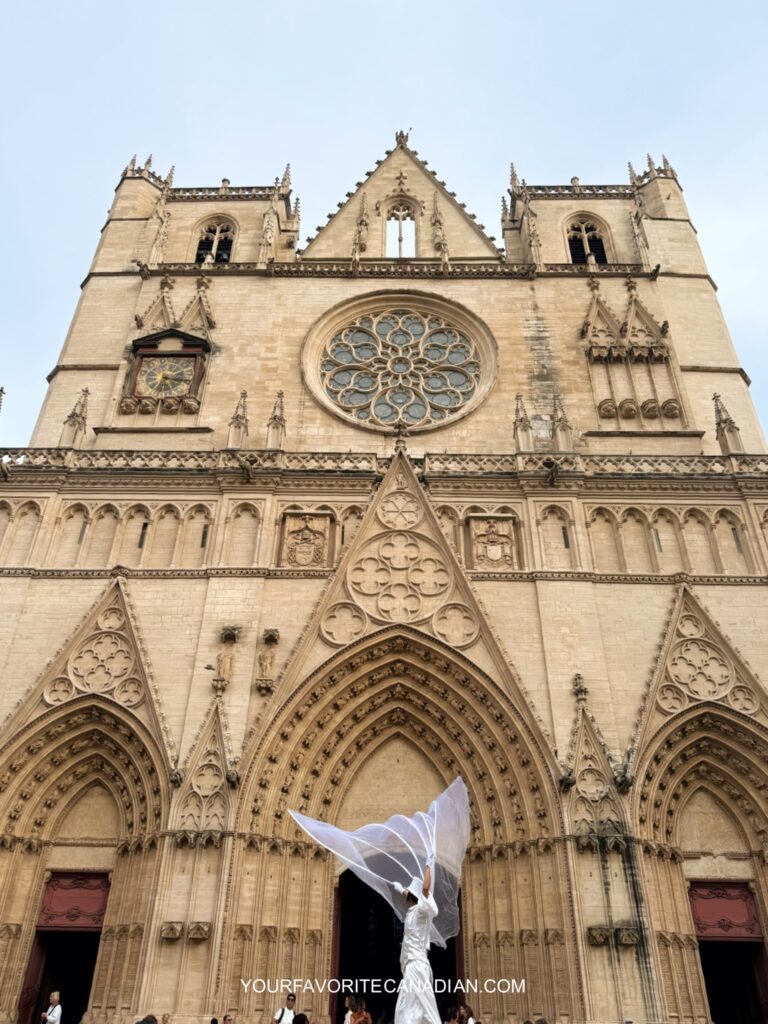
While you’re already exploring Vieux Lyon, don’t miss Cathédrale Saint-Jean-Baptiste.
Located right in the heart of Vieux Lyon, the cathedral is impossible to miss.
We’ll be honest: we personally found Notre-Dame de Fourvière more impressive, especially because of its incredible interior mosaics. But Saint-Jean is still absolutely worth visiting, especially because you’re already walking through this neighborhood.
The cathedral has a beautiful Gothic exterior and is also famous for its astronomical clock.
And the best part?
It’s free!
- How much time to allow: 10-30 minutes
- Address: Place Saint-Jean, Vieux Lyon
Because opening times can vary depending on religious services, check the current schedule before planning your visit here.
6
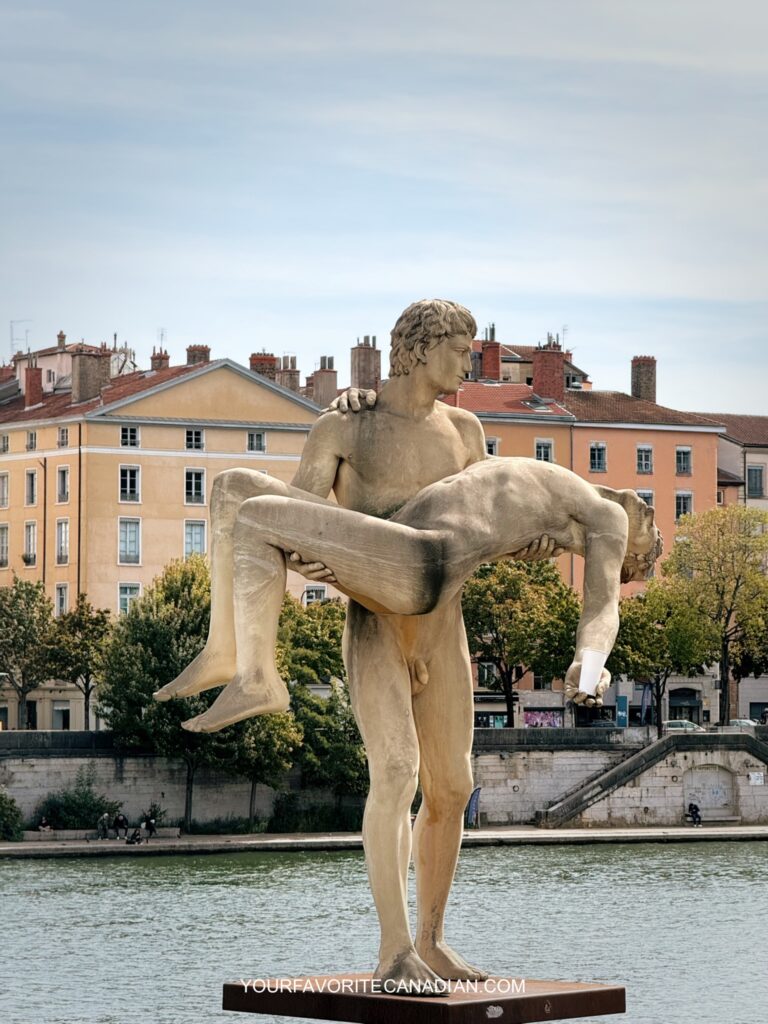
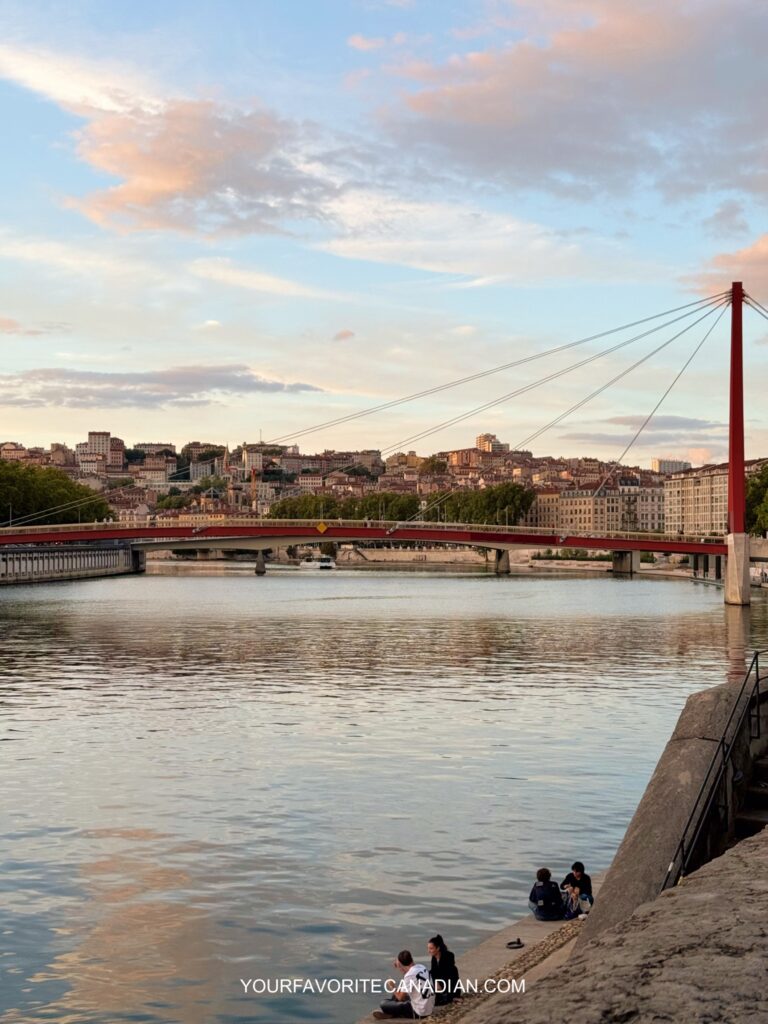
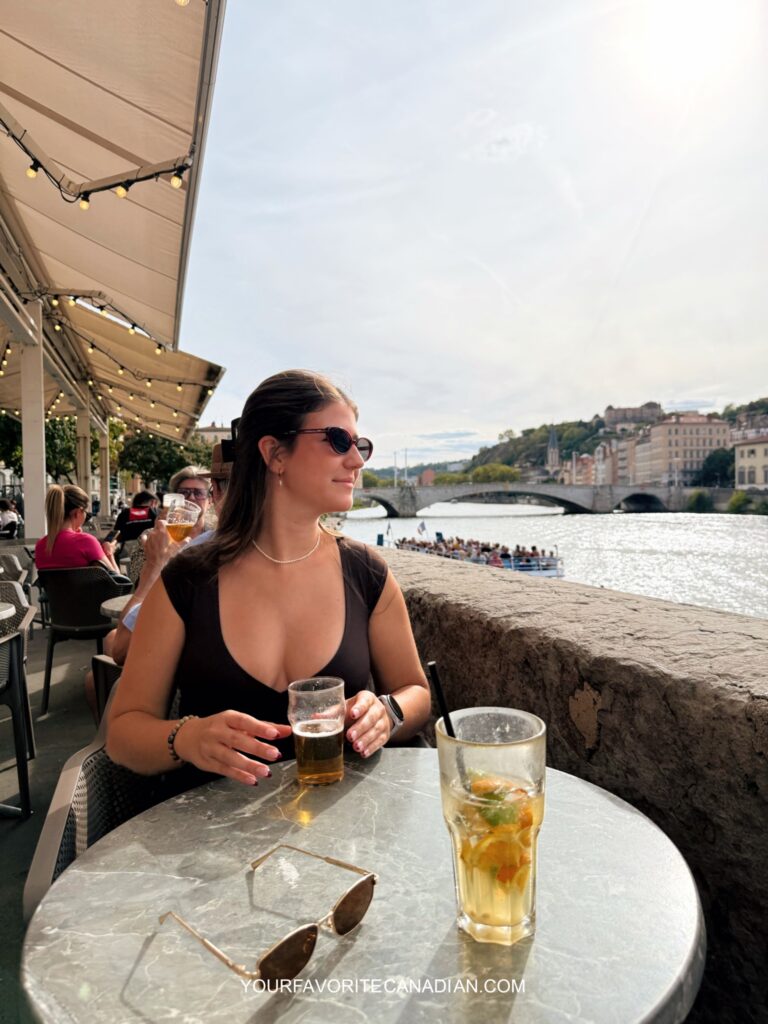
Have a Drink or Non-Alcoholic Refreshment by the Rhône
One of the nicest things to do in Lyon is simply slow down and spend some time beside the water.
The city sits at the meeting point of the Rhône and Saône rivers, and the riverbanks are full of terraces, cafés and casual places where you can sit outside and enjoy the atmosphere.
The Rhône quays in particular are popular with locals, especially when the weather is nice.
Look for one of the casual riverside buvettes, cafés or terraces and grab a coffee, soda, lemonade, mocktail or another refreshing drink while watching people go by.
Depending on the place and what you order, expect roughly €4-€8 (CA$7-CA$13) for a non-alcoholic drink.
It’s a great option for late afternoon or early evening when you don’t necessarily want another major sightseeing activity.
- Tip: Prices and opening hours at seasonal riverside spots can change considerably, so check before heading there.
7
Explore Croix-Rousse
If you have more than one day in Lyon, add Croix-Rousse to your itinerary.
This historic neighborhood sits on a hill overlooking the city and is closely connected to Lyon’s silk-weaving history.
The neighborhood was historically home to the Canuts, Lyon’s silk workers, and its architecture still reflects that history. You’ll find tall buildings with large windows that were designed to accommodate silk looms, along with steep streets, staircases, cafés, independent shops and traboules.
Don’t miss the Fresque des Canuts
One of the most interesting things to see here is the Fresque des Canuts, an enormous trompe-l’œil mural depicting the neighborhood and its residents.
Lyon is famous for its murals, with more than 100 painted walls around the city.
You can visit the mural for free and then continue walking through the neighborhood.
- Good to know: This area has plenty of stairs and steep streets, so wear comfortable shoes.
Stay connected! Follow us on social media for exclusive content & updates on our travels.



On our website, you’ll find all the essential information and tips, while on our social media, you’ll get even more – including personal experiences, funny moments, stunning videos, and much more!
8
Relax at Parc de la Tête d’Or
Need a break from sightseeing?
Head to Parc de la Tête d’Or, one of Lyon’s largest and most popular green spaces.
The park covers around 105 hectares and includes a large lake, botanical gardens, walking paths and a zoo.
You don’t need to spend money here to enjoy it. You can simply walk around the lake, relax on the grass, explore the gardens or have a picnic.
The botanical garden is also particularly impressive, with thousands of plant species and large greenhouses.
- Our tip: It’s a little farther from the main historic attractions, so we’d save it for a second day rather than trying to squeeze it into a short one-day itinerary.
9
How to Get Around Lyon
One of the great things about Lyon is that many of the major attractions can be visited on foot.
Vieux Lyon, Saint-Jean Cathedral, the Saône riverbanks and several restaurants are all located close together.
For longer distances, Lyon has an extensive public transportation network including metro, tram, buses and funiculars.
A single public transport journey starts at around €1.60 (CA$2.60) under the current TCL fare structure, although the exact price depends on the zones and ticket purchased.
The funicular is particularly useful for getting from Vieux Lyon up to Fourvière.
For current fares, routes and ticket options, check the official TCL Lyon public transportation website before your trip.
10
How Many Days Do You Need in Lyon?
One day in Lyon
If you only have one day, focus on:
- Vieux Lyon
- Saint-Jean Cathedral
- Roman Theatres and Odeon
- Notre-Dame de Fourvière
- A traditional bouchon lyonnais
You can see a surprising amount of Lyon in one day because many of these attractions are close together.
We personally have only spent one day in Lyon and felt like it was enough.
Two days in Lyon
Two days would give you a much more relaxed experience instead of rushing between attractions.
11
Is Lyon Expensive?
Lyon doesn’t have to be an extremely expensive destination.
Accommodation will probably be one of your biggest expenses, but there are plenty of ways to explore the city on a budget.
Several of the city’s most beautiful attractions are completely free, including:
- Vieux Lyon
- Traboules that are open to the public
- Roman Theatres and Odeon
- Notre-Dame de Fourvière Basilica
- Saint-Jean Cathedral
- Parc de la Tête d’Or
- Lyon’s outdoor murals
- Walking along the rivers
This makes Lyon a particularly good destination if you’re trying to keep your sightseeing budget low.
Final Thoughts: Is Lyon Worth Visiting?
Absolutely.
What we loved about Lyon is that it doesn’t feel like a city where you have to spend a lot of money to have a good time.
Some of our favorite experiences were completely free: walking through Vieux Lyon, discovering the Roman ruins, visiting the Basilica of Notre-Dame de Fourvière and simply wandering along the rivers.
And if you’re a food lover, Lyon gives you another reason to visit. Between the traditional bouchons, local specialties, cafés and riverside terraces, eating is definitely part of the experience.
Frequently Asked Questions About Visiting Lyon, France
What are the best things to do in Lyon, France?
Some of the best things to do in Lyon include exploring Vieux Lyon (Old Lyon), visiting the Basilica of Notre-Dame de Fourvière, discovering the Roman Theatres and Odeon, visiting Saint-Jean Cathedral, walking along the Rhône and Saône rivers, and trying traditional Lyonnais cuisine at a bouchon lyonnais.
Is Lyon worth visiting?
Yes, Lyon is absolutely worth visiting, especially if you want to experience a French city with a mix of history, architecture, food and local culture. Lyon has more than 2,000 years of history, UNESCO-listed historic areas, Roman ruins, beautiful churches and a famous culinary scene.
It is also a great alternative to spending your entire France itinerary in Paris.
How many days do you need in Lyon?
We recommend spending 2 days in Lyon if you want to see the city’s main attractions without rushing.
One day is enough to visit Vieux Lyon, Saint-Jean Cathedral, the Roman Theatres, Notre-Dame de Fourvière and enjoy a traditional meal.
With two or three days, you can also explore Croix-Rousse, Parc de la Tête d’Or, Presqu’île and Lyon’s riverside areas.
What is Vieux Lyon famous for?
Vieux Lyon is famous for its Renaissance architecture, cobblestone streets, historic courtyards, traboules and traditional restaurants. It is one of the most historic neighborhoods in Lyon and is part of the city’s UNESCO World Heritage Site.
What are traboules in Lyon?
Traboules are hidden passageways that connect streets by passing through buildings and courtyards. They are one of the most unique features of Lyon, particularly in Vieux Lyon and Croix-Rousse.
Some traboules are open to the public and can be explored for free.
Is Notre-Dame de Fourvière free to visit?
Yes. General admission to the Basilica of Notre-Dame de Fourvière is free. Visitors can enter the Basilica and admire its elaborate interior, including its famous mosaics, stained glass and decorative details.
Paid guided tours and other experiences may be available separately.
What is the best free attraction in Lyon?
There are many free things to do in Lyon. Some of the highlights include exploring Vieux Lyon, visiting the Roman Theatres and Odeon, entering Notre-Dame de Fourvière, visiting Saint-Jean Cathedral, exploring Parc de la Tête d’Or and walking along the Rhône and Saône rivers.
Is the Roman Theatre in Lyon free?
Yes. The Roman Theatres and archaeological site on Fourvière Hill can be visited for free. The nearby Lugdunum Museum has separate admission. The Roman ruins are an easy attraction to combine with a visit to Notre-Dame de Fourvière.
What is a bouchon lyonnais?
A bouchon lyonnais is a traditional restaurant in Lyon serving local Lyonnais cuisine in a casual and convivial atmosphere. Typical dishes can include quenelles, sausage, pâté, salade lyonnaise and other regional specialties.
Eating at a bouchon is one of the classic food experiences to have in Lyon.
Where should you eat traditional food in Lyon?
Lyon is known for its bouchons lyonnais, especially around Vieux Lyon and other central neighborhoods.
We personally ate at Le Laurencin because we found an affordable set menu during our visit. We enjoyed our meal, particularly the onion soup, but after sharing our experience online, several French followers told us they considered it touristy and recommended trying other bouchons instead.
Is Lyon expensive to visit?
Lyon can be visited on different budgets. While accommodation and restaurants can become expensive, many of the city’s major attractions are free.
Travelers can save money by exploring the historic neighborhoods on foot, visiting free attractions, using public transportation and choosing affordable restaurants or set menus.
What is Lyon known for?
Lyon is known for its history, Renaissance architecture, Roman heritage, silk-making history, traboules and food culture.
It is often considered one of France’s major culinary destinations and is particularly famous for its traditional bouchons lyonnais.
Is Lyon a walkable city?
Yes, many of Lyon’s main tourist attractions are easy to reach on foot, particularly in Vieux Lyon, Presqu’île and along the rivers. However, some areas, especially Fourvière and Croix-Rousse, involve steep hills and stairs.
Lyon also has an extensive public transportation network, including metro, buses, trams and funiculars.
What is the best area to stay in Lyon?
For first-time visitors, Vieux Lyon and Presqu’île are convenient areas to consider because they are close to many of Lyon’s main attractions, restaurants and public transportation.
Croix-Rousse is another option for travelers who prefer a more residential and local atmosphere.
What is the best time to visit Lyon?
Spring, summer and early autumn are popular times to visit Lyon because the weather is generally suitable for walking and outdoor sightseeing.
September and October can be particularly pleasant for exploring the city without the peak summer atmosphere.
Lyon is also beautiful during the winter, especially around the holiday season.
What should you not miss in Lyon?
If you’re visiting Lyon for the first time, don’t miss Vieux Lyon, Notre-Dame de Fourvière, the Roman Theatres and Odeon, Saint-Jean Cathedral and a traditional bouchon lyonnais.
What’s Next?
Now that you know the best activities in Lyon, it’s time to plan your trip! Here are some articles that could be helpful :
- 7 Of the Best Activities to Do in Nice, France
- France Travel Guide: Ultimate Tips and Information to Know
- 7 Of the Best Things to Do in Monaco
Don’t want to miss out on our latest articles? Be sure to subscribe to our website, and you’ll receive a notification every time we publish something new!
